

Waikīkī Beach is a connected stretch of beaches on Oʻahu’s south shore, with swimming, bodyboarding, surfing and outrigger canoeing among the activities. To choose where to go, first orient yourself along the shoreline, then check current conditions and the amenities available at your preferred access point.
- Shoreline: About two miles of connected beaches.
- Named sections: Fort DeRussy Beach, Kūhiō Beach and Queen Surf Beach are among them.
- Swimming: Lifeguard service is available at Waikiki – Kuhio; check current conditions before entering the water.
- Nearby stops: Waikīkī Aquarium and Kapiʻolani Regional Park are coastal stops.
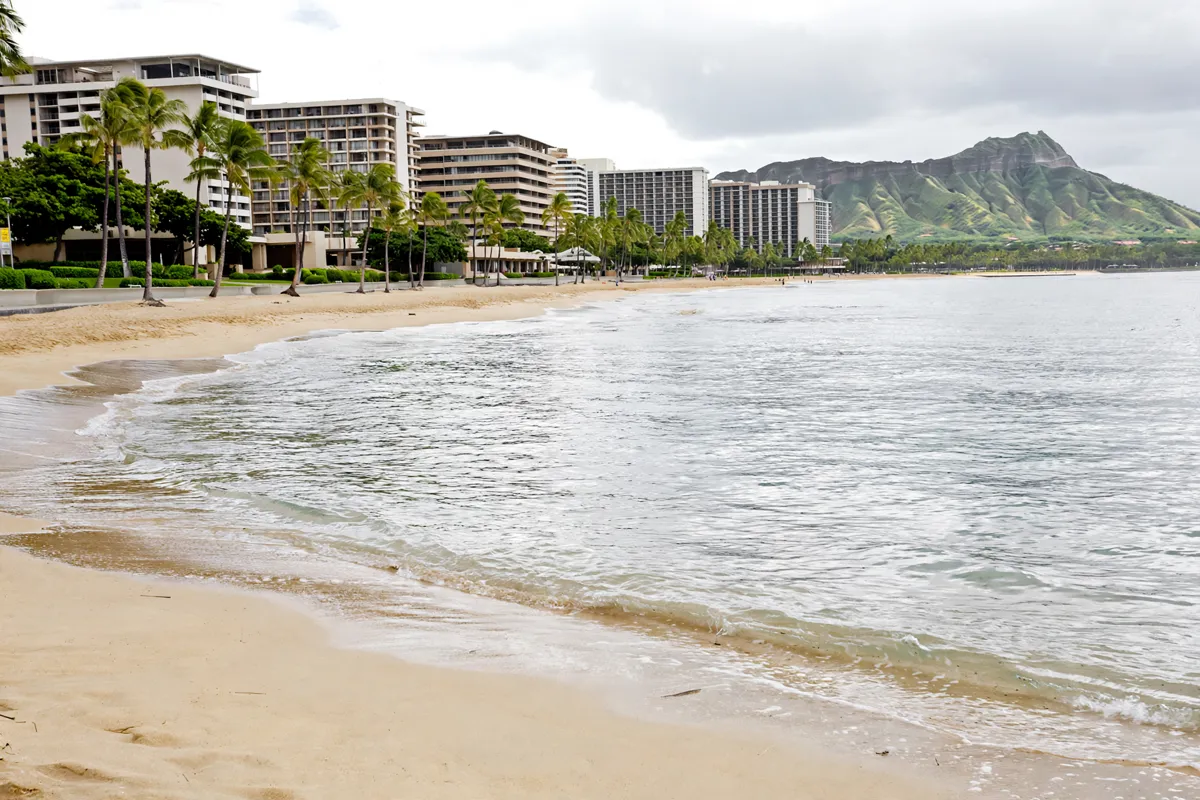
Understanding Waikīkī Beach’s shoreline
Waikīkī Beach is a roughly two-mile connected shoreline made up of several beaches, rather than one continuous stretch of sand with a single access point. The Hawaiʻi tourism board identifies Fort DeRussy Beach, the beach fronting the Royal Hawaiian Hotel and Westin Moana Surfrider, Kūhiō Beach along Kalākaua Avenue, and Queen Surf Beach near Lēʻahi (Diamond Head).
That sequence gives you a useful way to place the different sections: Fort DeRussy is one end of the named list, while Queen Surf is near Diamond Head. Kūhiō Beach runs along Kalākaua Avenue, and Waikīkī Beach fronting the Royal Hawaiian Hotel and Westin Moana Surfrider is another distinct section.
The beach has lifeguards, picnic tables, rentals, food concessions, restrooms and showers, though the facilities are not assigned to individual access points. If a particular facility matters to your plans, check its location before setting out.
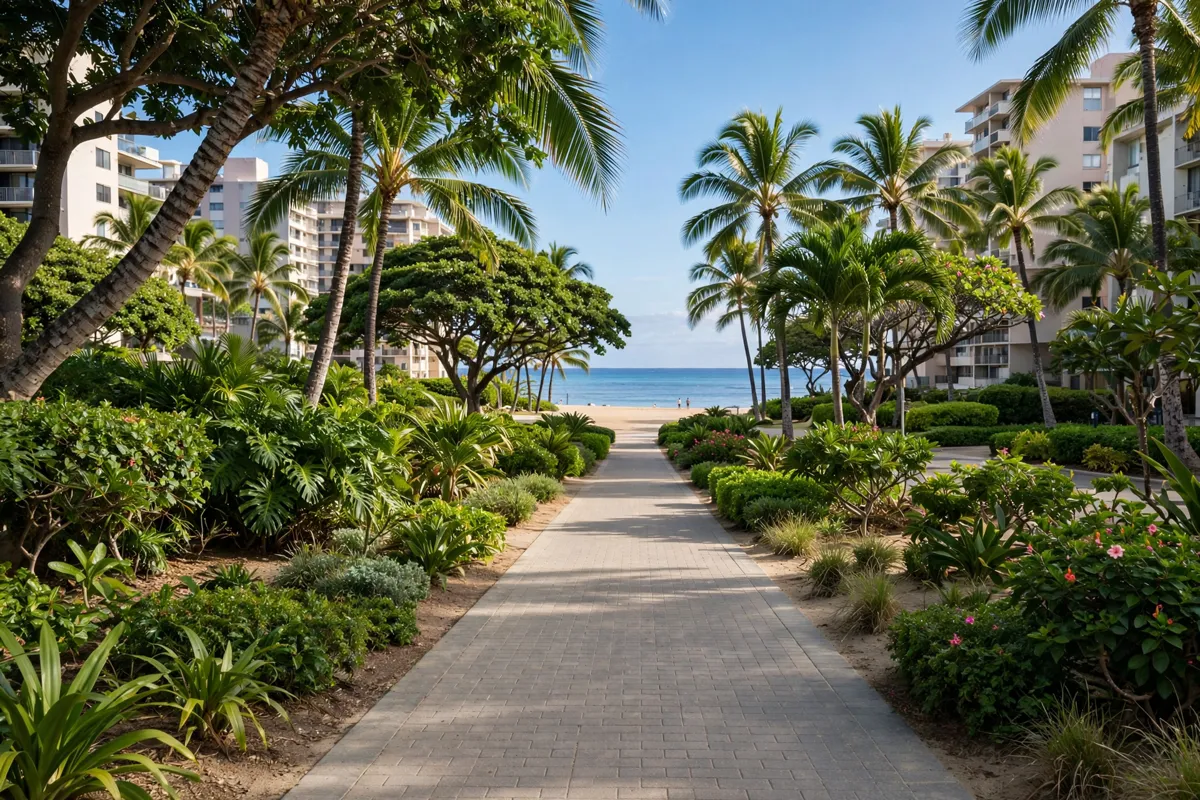
Finding public beach access
Choose an access point by matching the beach section you want with the facilities and conditions you need. The named stretches help you orient along the coast, but the amenities are not confirmed at each entrance.
Hawaiʻi Ocean Safety provides lifeguard service at Waikiki – Kuhio from Monday through Sunday, 8:00 am–6:30 pm. Its lifeguarded-beach information includes directions, descriptions, amenities and current conditions. Check the official site before you go, since service hours and beach conditions can affect your plans.
Swimming, bodyboarding, surfing and outrigger canoeing are all activities associated with Waikīkī Beach; conditions and facilities may differ by section. Hotel rooms in Waikīkī are available at Sweetwater at Waikiki.
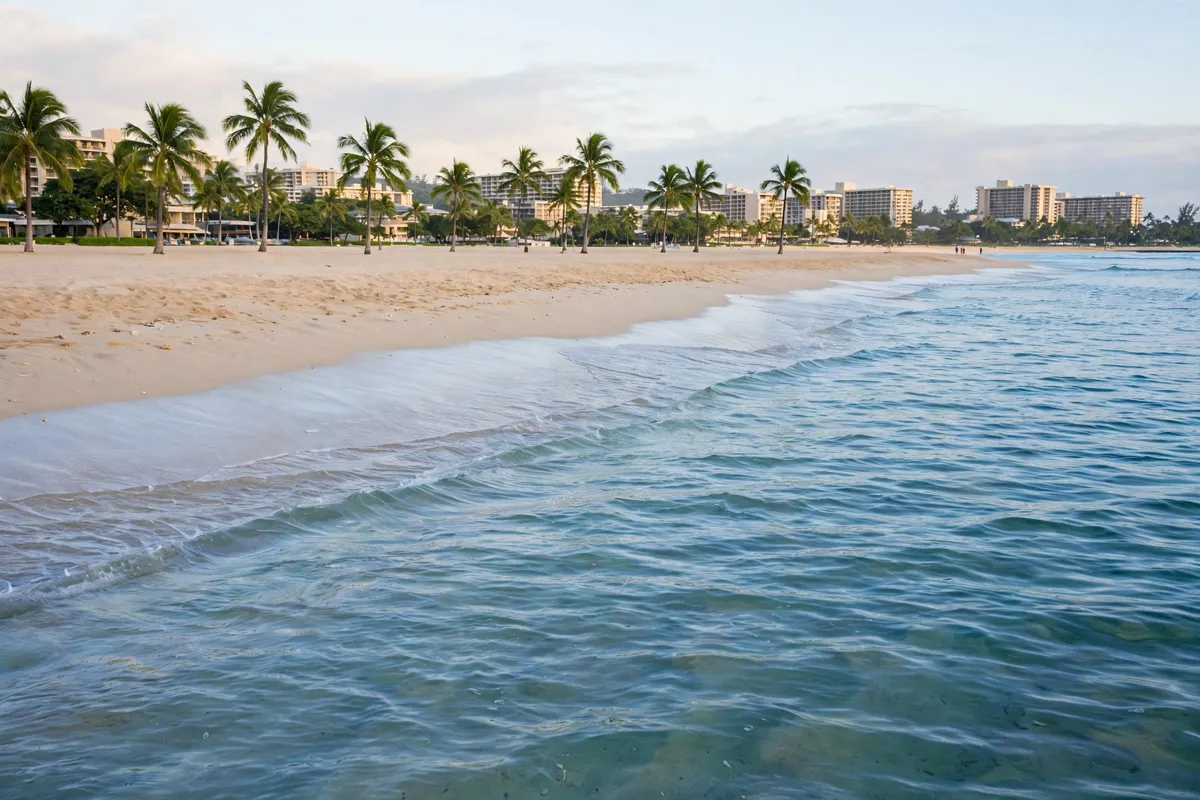
Swimming, conditions, and beach etiquette
Check conditions before swimming and follow lifeguard instructions, posted warnings and announcements. Hawaiʻi Ocean Safety advises swimming with a buddy and during daylight hours, and reminds beachgoers that ocean conditions can change quickly; no warning sign does not mean the water is safe.
Warning signs may flag hazards such as dangerous shorebreak, strong currents, high surf, sudden drop-offs, sharp coral, waves breaking on ledges, or areas where swimming or diving are not allowed. Ask a lifeguard about current conditions and hazards before entering the water.
Rain and water appearance matter too. Hawaiʻi’s Clean Water Branch advises avoiding swimming during or immediately after heavy rain and staying out of water that looks brown or turbid, even if no Brown Water Advisory has been issued.
Its Environmental Health Portal provides water-quality advisories, notifications, monitoring results and a map viewer. People at higher risk of illness—including young children, elderly people, pregnant people, and people with chronic illness or weakened immune systems—should stay out of the water whenever notifications are issued or signs are posted.
During a threat of severe weather, Hawaiʻi Ocean Safety advises staying out of the ocean and away from beaches and shorelines until local authorities say it is safe. Avoid touching, kicking or standing on coral; foot protection is advised where sharp coral is present.
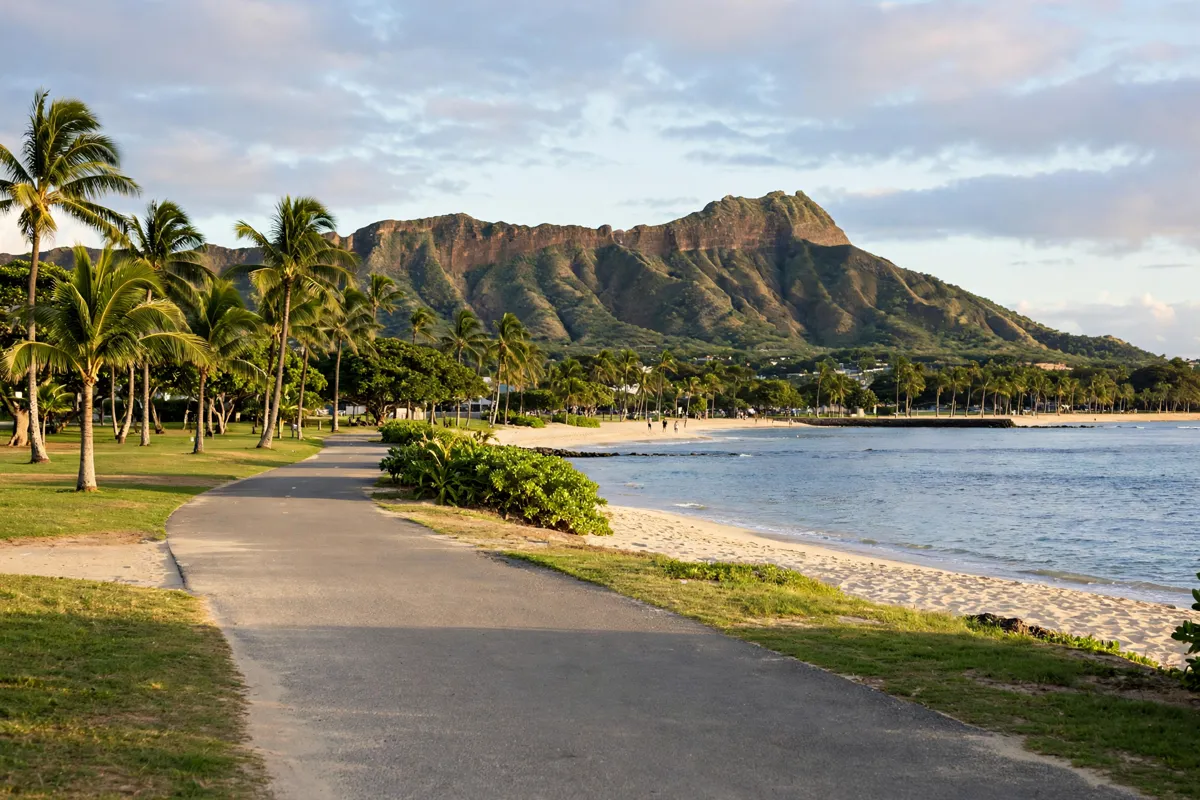
Nearby coastal walks and stops
Pair time at the beach with a coastal stop nearby. Kapiʻolani Regional Park is about 23 minutes on foot or about 4 minutes by car from Sweetwater at Waikiki; the park sits near the Diamond Head end of the shoreline. Its paths and picnic areas make it a natural addition to a beach outing.
The Waikīkī Aquarium is another coastal stop to combine with a beach visit. The Waikīkī Aquarium visit guide covers what to know before going.
FAQs
Is Waikīkī Beach one beach or several?
It is a connected stretch of several beaches spanning about two miles along Oʻahu’s south shore.
Which activities are available at Waikīkī Beach?
Swimming, bodyboarding, surfing and outrigger canoeing are among the activities associated with the beach.
Where can you check water conditions?
Hawaiʻi Ocean Safety provides current conditions for lifeguarded beaches, while the Clean Water Branch provides water-quality information and advisories.
What should you do if the water looks brown?
Stay out of brown or turbid water, including after heavy rain, even if no Brown Water Advisory has been issued.